
Your Career Will Not Grow in Secret: 7 Ways to Build Skills, Visibility and Professional Value
Having talent is important, but talent alone does not guarantee career growth.
Many hardworking professionals remain unnoticed—not because they lack ability, but because they have not learned how to develop, package and communicate their value.
The professional world is changing rapidly. Employers increasingly want people who can combine technical knowledge with creativity, communication, adaptability and digital confidence. The World Economic Forum reports that employers expect approximately 39% of workers’ core skills to change by 2030. Creative thinking, resilience, flexibility, curiosity and lifelong learning are also becoming increasingly important.
The message is clear: you cannot build tomorrow’s career using only yesterday’s skills.
Here are seven practical ways to take responsibility for your personal development and position yourself for greater career opportunities.
1. Stop Waiting for Your Organisation to Develop You
Some organisations invest heavily in employee development. Others barely remember that training exists until someone resigns.
While employers have a role to play, your professional growth is ultimately your responsibility.
Do not wait for your manager to recommend a course, organise a workshop or assign you to an exciting project. Identify the skills becoming important in your industry and deliberately begin learning them.
Ask yourself:
-
Which skills are becoming valuable in my profession?
-
What tasks do I struggle to complete confidently?
-
What knowledge would qualify me for a better role?
-
Which digital tools could improve my productivity?
-
What can I learn now that will still be valuable in three years?
Your employer may own your present job description, but you must take ownership of your future.
2. Build Skills That Solve Real Problems
Collecting certificates can make your CV longer, but career growth comes from being able to solve problems.
Instead of learning a skill simply because it is trending, connect it to a practical professional need.
For example:
-
Learn digital marketing to help an organisation attract customers.
-
Learn video production to communicate ideas more effectively.
-
Learn website development to help businesses establish a credible online presence.
-
Learn AI tools to improve research, productivity and content creation.
-
Learn professional writing to create stronger reports, proposals and campaigns.
-
Learn data analysis to support better business decisions.
A useful skill should help you produce a result, save time, generate income, improve communication or solve a measurable problem.
Do not only ask, “What course should I take?”
Ask, “What problem will I be able to solve after completing it?”
3. Learn How to Communicate Your Ideas
You may be highly intelligent, but if you cannot explain your ideas clearly, people may struggle to recognise your value.
Communication affects almost every part of professional life:
-
Job interviews
-
Presentations
-
Reports
-
Proposals
-
Emails
-
Meetings
-
Leadership
-
Customer relationships
-
Negotiations
-
Social media presence
Strong communication is not about using the biggest English words available. It is about presenting information clearly, confidently and appropriately for the audience.
Learn how to speak with structure, write professionally, listen carefully and turn complex ideas into understandable messages.
In a noisy digital world, clarity is a career advantage.
4. Develop Digital and AI Confidence
Digital competence is no longer limited to people working in technology.
Professionals in marketing, administration, education, media, finance, human resources and entrepreneurship are increasingly expected to use digital tools effectively.
AI is also changing how professionals research, create, analyse information and manage tasks. Microsoft’s 2026 Work Trend Index found that 66% of surveyed AI users said AI allowed them to spend more time on high-value work, while 58% said they were producing work they could not have produced one year earlier. Microsoft Work Trend Index
You should be able to use technology to:
-
Conduct structured research
-
Develop professional documents
-
Create presentations
-
Manage projects
-
Analyse basic information
-
Produce digital content
-
Collaborate remotely
-
Automate repetitive tasks
-
Communicate with customers
-
Promote your work or business
You do not need to know every tool. You need to confidently use the right tools for your responsibilities and goals.
5. Build Evidence, Not Just Experience
Saying you have five years of experience does not automatically prove that you can produce excellent results.
Employers and clients want evidence.
Begin documenting your professional work through:
-
A well-organised portfolio
-
Project case studies
-
Before-and-after examples
-
Testimonials
-
Professional videos
-
Articles and thought-leadership content
-
Campaign results
-
Completed websites or designs
-
Measurable business achievements
For each important project, explain:
-
The problem you were asked to solve
-
The role you played
-
The process or tools you used
-
The result you achieved
-
What you learned
Your portfolio should not merely show that you were busy. It should demonstrate that your contribution created value.
6. Become Visible for the Right Reasons
Many capable professionals are almost invisible online.
Their LinkedIn profiles are incomplete. Their portfolio is outdated. Their social media presence does not reflect their expertise. Search their name online and even Google looks slightly confused.
Professional visibility is not the same as making noise or pretending to be an expert. It means consistently presenting credible evidence of what you know and what you can do.
You can improve your visibility by:
-
Updating your professional biography
-
Using a quality professional photograph
-
Sharing useful industry insights
-
Publishing articles or short educational videos
-
Showcasing completed projects
-
Participating in relevant professional communities
-
Building a personal website or digital portfolio
-
Connecting with people in your industry
-
Maintaining a consistent professional identity
People cannot recommend, hire or collaborate with someone whose value they cannot clearly see.
Your work may speak for itself, but sometimes it needs a microphone.
7. Create a Personal Career Growth Plan
Career growth should not be based entirely on luck, office politics or annual New Year resolutions.
Create a simple development plan covering the next six to twelve months.
Your plan should include:
Your Career Goal
What role, opportunity, income level or professional milestone do you want to reach?
Your Skills Gap
What do you need to learn or improve before you are ready for that opportunity?
Your Learning Plan
Which training programmes, books, mentors, projects or practical experiences will help you develop?
Your Visibility Plan
How will you show your knowledge, projects and professional progress?
Your Network Plan
Which professional relationships and communities should you intentionally build?
Your Progress Measures
How will you know that you are improving?
Review the plan every month. Keep what is producing results, improve what is weak and remove what is wasting your time.
A career without direction can remain active for years without making meaningful progress.
How Coded TV Can Support Your Professional Growth
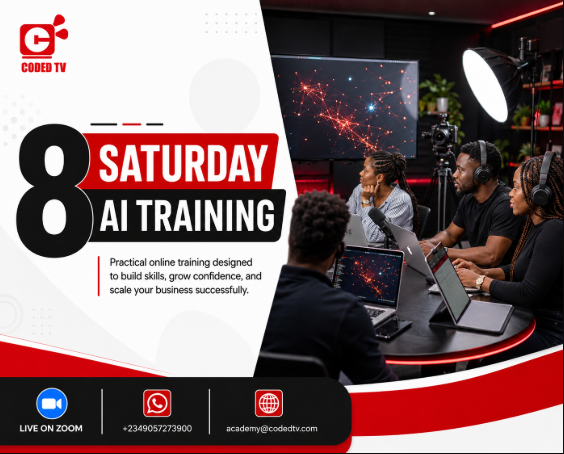
At Coded TV, we help individuals, professionals, entrepreneurs and organisations develop practical digital, creative and communication skills for today’s workplace.
Through Coded TV and Coded Film & Tech Academy, you can receive support in areas such as:
AI Tools and Workplace Productivity
Learn how to use AI for research, content creation, business operations, idea development, marketing and professional communication.
Video Production and Editing
Develop practical skills in video production, storytelling, editing, graphics, sound and digital content creation.
Digital Marketing and Social Media
Learn how to develop campaigns, grow an online presence, reach the right audience and turn digital attention into meaningful business results.
Website Development
Build the skills required to create professional websites, portfolios and digital platforms.
Professional and Personal Branding
Present your skills, achievements and professional identity through quality photography, video profiles, portfolios, websites and strategic content.
Writing and Communication Support
Improve your reports, proposals, company profiles, scripts, articles, marketing content and other professional documents.
Corporate and Customised Training
Organisations can request practical training programmes designed around their teams, business goals and operational challenges.
Growth Begins When You Take the Next Step
You do not need to master everything at once.
Choose one skill. Complete one project. Improve one part of your professional profile. Attend one useful training. Publish one thoughtful piece of content.
Small, consistent improvements eventually become visible professional transformation.
Your career will not grow simply because you have potential. It grows when potential is developed into skill, skill is turned into results and those results are communicated to the right people.
Are you ready to build practical skills, strengthen your professional visibility and prepare for better opportunities?
Contact Coded TV today to enquire about our training programmes or request a customised professional development session for yourself, your team or your organisation.